

The most important takeaways when evaluating Lap-Band vs gastric bypass include:
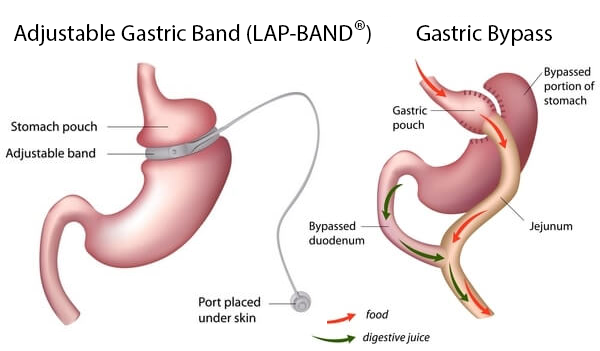
- How they work: Both make you feel full sooner while eating. Only bypass reduces the amount of minerals you absorb. Only Lap-Band (i) requires initial and ongoing adjustment by your surgeon and (ii) is reversible.
- Qualify: Same requirements (30+ BMI with health problems, 40+ without)
- Hospital & recovery: Lap-Band is a less complicated procedure with a shorter operating time and shorter hospital stay. In-hospital and post-op recovery is similar.
- Weight loss & health improvement: Gastric bypass results in faster and more short- and long-term weight loss.
- Insurance: Same (if your policy covers bariatric surgery, both bypass and band will be covered)
- Cost: Same with insurance, bypass is about $9,000 more expensive without insurance.
- Diet & life after: Similar diet and exercise regimen. Bypass requires more stringent vitamin/mineral observation and supplementation.
- Complications & side effects: Both have a 99.8+% survival rate. Bypass has a higher risk of short-term complications. Band has a higher risk of long-term complications.
Read and click the sections below for everything you need to know to decide which procedure is best for you.
TABLE OF CONTENTS
Click on any of the topics below to jump directly to that section
- How They Work
- Weight Loss
- Health Benefits
- Qualify
- Insurance
- Cost Without Insurance
- Recovery
- Diet & Life After
- Downsides
- Summary
- Patient Community & Expert Advice
- Find a Gastric Bypass or Lap-Band Surgeon

SECTION SUMMARY:
- Bypass: Feel full sooner while eating, absorb fewer minerals
- Band: Feel full sooner while eating, adjustable, reversible
Understanding gastric bypass surgery vs Lap-Band surgery starts with the fundamental differences in how each procedure impacts your digestive system:
Gastric Bypass
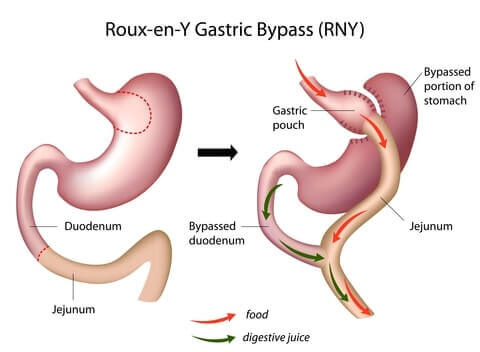
Why Gastric Bypass Works
- Reduced stomach size makes the patient feel full sooner after eating
- Rearranged intestines causes the body to absorb fewer minerals
- Dumping syndrome symptoms deter patients from eating unhealthy foods
How Gastric Bypass Is Performed
Gastric bypass, also called Roux-en-Y gastric bypass or RNY for short, is performed using the following steps:
- Cut and staple the top portion of the stomach to create a small pouch at the end of the esophagus
- Leave the remainder of the stomach attached to the top of the small intestines
- Go further down the small intestine, cut it, and attach it to the pouch
- Take the end of the small intestine that is still connected with the non-pouch portion of the stomach and attach it to the bottom of the “Roux limb.” This allows the digestive juices produced by the stomach to “meet up” with the food in the intestines.
Lap-Band
Why Lap-Band Surgery Works
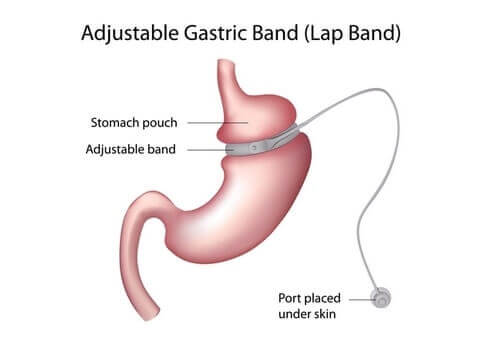
- A band wraps around and squeezes a narrow section in the upper-middle part of the stomach. This creates a smaller stomach “section” above the band which fills up quicker after eating, causing the patient to feel full sooner and eat less.
How Lap-Band Surgery Is Performed
The Lap-Band, also called the gastric band or laparoscopic adjustable gastric band, has been used in Europe since the 90’s but wasn’t approved by the FDA in the States until 2001.
The gastric band surgery procedure involves the sewing of a silicone and Silastic band around the top of the stomach. A balloon around the inner surface of the band (imagine the inside of a bicycle tire) is connected to a tube that leads to a half-dollar-sized port above the abdominal muscles but below the skin.
During follow up visits, your doctor will add or remove saline solution (salt water) to make it tighter or looser. The tighter it is, the less hungry you feel and vice-versa.
The procedure is also fully reversible (unlike gastric bypass).
SECTION SUMMARY:
- Lap-Band vs Gastric Bypass: Same BMI requirements
- Click here to calculate your BMI
In order to have Lap-Band surgery or gastric bypass surgery, your body mass index (BMI) must fall within one of the following ranges:
- Body mass index 40 or above or
- Body mass index from 35 to 40 as long as you have a serious obesity-related health problem (“comorbidity”) such as diabetes, asthma, hypertension, joint problems, sleep apnea, or one of many others.
- Body mass index from 30 to 35 may be accepted if certain health issues are present
SECTION SUMMARY:
- Bypass: ~$556/mo (~$24,000 total)
- Band: ~$334/mo (~$15,000 total)
The cost of surgery should not dictate which procedure you have. You should move forward with the procedure that is most likely to work for you after thorough research and a consultation with your surgeon.
Still, if you don’t have insurance that covers bariatric surgery, there will be a noticeable difference in Lap-Band vs gastric bypass cost:
- Gastric bypass: Average cost is about $24,000
- Lap-Band: Average cost is about $15,000
Surgeons in your area may charge as low as $15,000 for gastric bypass or $8,000 for Lap-Band.
Financing may also be available, depending on your credit. Payments are likely to be around the following if your procedure is financed over 5 years:
- Gastric bypass: $556/mo
- Lap-Band: $334/mo
Visit our Financing Weight Loss Surgery page for all the possible ways to finance your surgery.
Cost of Not Having Surgery vs Cost of Weight Loss Surgery
Even if you’re paying out of pocket, the cost of gastric bypass and Lap-Band is far less than the long-term costs of obesity-related health problems for morbidly obese people who don’t have surgery.
On average, weight loss surgery patients pay off their entire surgery and start getting ahead financially after only 2 years (11).
To illustrate: One study found that bariatric patients pay as much as $900 less per month as soon as 13 months after surgery than similar people who didn’t have surgery (12). Starting in month 13, that’s almost $11,000 saved per year in total medical costs.
Fewer prescription drugs alone have been found to save patients $3,000 or more per year (13).
SECTION SUMMARY:
- Lap-Band vs Gastric Bypass: Similar diet and exercise regimen, feel full sooner after both
- Gastric bypass: Requires stricter supplementation
- LAP-BAND®: Requires ongoing band and tube adjustments
Diet: Gastric Bypass Vs Band
Your Lap-Band vs gastric bypass diet transition is virtually identical:
- 2+ Weeks Before – Practice your post-surgery diet
- 2 Weeks Before – High protein, low sugar, low carbs
- 1 Week Before – Stop or change some medications
- 2 Days Before – Clear liquids only
- Midnight Before Surgery – Nothing to eat or drink
- In Hospital to 7 Days After Surgery (Varies by Surgeon) – Sugar-free clear liquids only
- Day 1 to Week 2 After Surgery (Varies by Surgeon) – Add thicker drinks & smooth foods
- Day 2 to Week 3 After Surgery (Varies by Surgeon) – Slowly test pureed foods & soft solid foods
- Day 3 to Weeks 4+ After Surgery (Varies by Surgeon) – Slowly test solid foods
Following are dietary guidelines for both gastric bypass and Lap-Band:
- Test one food at a time to make sure you can tolerate it
- Eat proteins first, in solid form (e.g., not protein shakes)
- Eat healthy “whole” foods
- Avoid processed foods
- Avoid sugary foods or drinks
- Eat slowly and chew thoroughly
- No starchy foods like rice, bread, and pasta
- Avoid any food that is difficult to digest (may be able to tolerate over time), such as:
- Fibrous vegetables like broccoli, celery, and corn
- Nuts
- Seeds
- Skin of any meat
- Tough meats
- Avoid whole milk products
- Drink 64+ oz (2+ liters) of fluids spread throughout the day
- No drinking 30 minutes before or after meals (other than gastric balloon)
- Alcohol only in moderation
Diet issues unique to gastric bypass include:
- Most gastric bypass patients (about 80%) will experience dumping syndrome when they eat the wrong foods. Conveniently, the wrong foods are the unhealthy ones, so while dumping syndrome symptoms are unpleasant, they help you keep your gastric bypass diet in check
- Patients who undergo the bypass procedure are at especially high risk of developing Alcohol Use Disorder (AUD) (14) (15) (16)
See the following for more information:
Vitamins: Gastric Bypass Vs Lap-Band
Weighing the upside of extra weight loss after gastric bypass with the downside of potential vitamin deficiency is a big part of choosing the right procedure. For example, if you already have vitamin deficiency problems, that may be the deciding factor for going with the gastric band
Due to gastric bypass surgery’s higher levels of malabsorption, gastric bypass patients:
- Are much more likely than Lap-Band patients to require Thiamin (Vitamin B1) supplementation
- Must be more vigilant in confirming no vitamin or mineral deficiencies
Some of the vitamin requirements that are the same for Lap-Band and gastric bypass include:
- Daily multivitamin
- 1 to 2 per day, forever
- Chewable or liquid versions are best (instead of tablets)
- Take with food (except dairy) to maximize absorption
- At least 200% of the Recommended Dietary Allowance (RDA) of iron, folic acid, thiamine, copper, selenium and zinc
- Daily calcium supplement, in the form of calcium citrate
- Must be calcium citrate (NOT other forms of calcium)
- 1000-1500 mg. daily, forever
- Chewable and liquid versions are best (instead of tablets)
- Try to find one that includes Vitamin D
- Take 2 hours apart from Iron supplements (or Multivitamin that contains Iron) to maximize absorption
For either procedure, you may be required to take one or more of the following depending on your vitamin levels:
- Folate (folic acid)
- Iron
- Thiamin (Vitamin B1)
- Vitamin D
Exercise: Lap-Band Vs Gastric Bypass
After you’ve fully recovered from surgery (4 to 6 weeks), recommended exercise is the same for both Lap-Band and gastric bypass patients: 2.5 hours per week, spread out over 2 to 4 days.
Following this regimen will cause you to:
- Lose more weight
- Be more physically and mentally healthy
Learn more on our Exercise After Weight Loss Surgery page.
Food Addiction: Gastric Bypass Vs Lap-Band
Food addiction could be a problem after both gastric bypass and gastric band.
Our bodies secrete certain hormones, like ghrelin mentioned above, that tell us when we’re hungry and full, but hyperpalatable food (like junk food) may be overriding those hormone signals by overstimulating our reward centers, much like our bodies and brains react to an addictive drug.
You may have a bona fide food addiction if your desire for food takes priority over other parts of your life that you acknowledge to be more important, such as personal health, family, friends, work, your appearance, or avoiding obesity related health issues like hypertension, sleep apnea, or diabetes.
If left unchecked, food addiction can lead to obesity. For weight loss surgery patients, if not addressed prior to surgery, it can also lead to weight regain.
To find out if you may be suffering from food addiction, take our Food Addiction Quiz.
Relationships After Weight Loss
Significant weight loss after any type of bariatric surgery can lead to big changes with everyone around you.
While many of those changes are positive, some can also be extremely challenging and unexpected.
See our Relationships After Weight Loss Surgery page for important changes to prepare for.
SECTION SUMMARY:
- Lap-Band vs Gastric Bypass: Winner & Loser by Category
- Overall Winner: Depends on your situation
Your individual situation will determine whether Lap-Band or gastric bypass surgery is best for you. Following is a review of which procedure is “better” in each category discussed on this page.
- Most Popular Procedure: Gastric Bypass
- Most Short-Term Weight Loss: Gastric Bypass
- Most Long-Term Weight Loss: Gastric Bypass
- Best Health Improvement Gastric Bypass
- Easiest to Qualify: Tie
- Low-Cost Procedure (With Insurance): Tie
- Low-Cost Procedure (Without Insurance): Lap-Band
- Best Post-Op Diet: Lap-Band
- Fewest Risks & Side Effects: Tie
Discuss each of the pros and cons with your surgeon before making a final decision. Click here to find a weight loss surgeon.